
Read the print before adding anything else
Look at the shirt from a few steps away. Is the graphic small and centred, wide across the chest, or mainly on the back? Does it have one dominant colour or several equally strong ones? Those visible details affect what remains in the outfit once a jacket or bag is added.
A small chest graphic leaves more room for an interesting trouser or shoe. A large, high-contrast image is easier to make legible against plain bottoms. You can still combine patterns, but start with one clear focal point and add complexity only if you like the result.
Changing the lower half gives a relaxed tee different characters: a sporty short makes a casual pairing, while a skirt changes the balance and mood. [1] The shape around the shirt matters. The three combinations below apply that idea to everyday pieces you can compare in the Hubbuy spreadsheet.
Let one colour connect the outfit
Suppose a black tee has a cream illustration and a small green accent. You could start with blue jeans and plain sneakers, letting the illustration remain the focus. On another day, beige trousers can echo the lighter part of the print. A green cap is an optional third direction, rather than an instruction to buy green shoes and a green bag as well.
The amount of colour matters as much as the colour itself. A small accent repeated elsewhere can create a connection; several large coloured areas create a louder outfit. Start with the shirt and a plain bottom, then introduce one accessory. If the accessory distracts from the design you bought the tee for, remove it and compare again.
For a multicoloured print, use the base of the T-shirt as your first anchor. A dark base can join a dark trouser for a continuous outline, while lighter jeans create a clearer division. You do not need to use every colour in the artwork. Leaving some of them only in the graphic keeps the outfit from becoming a matching exercise.
Outfit one: graphic tee and straight jeans
Start with a black or white graphic tee and a plain straight jean. Let the shirt sit naturally, then compare a fully untucked version with a small front tuck. The first emphasises the loose top; the second makes the waist and trouser length more visible. Choose according to the actual shirt, not a rule about how every tee should be worn.
Keep the shoe colour simple while testing proportions. If a print contains a small red accent, a similarly small red detail on a sneaker can connect the outfit. A second large red graphic is more likely to compete with it. If the shirt is very long, check whether it covers the part of the trouser that gives the outfit its shape.
This is the easiest combination to repeat because one graphic does most of the work. A plain overshirt or zip-up can be added later. Before buying another tee, see whether your existing jeans and shoes give the new print somewhere useful to go.
Change the jean before changing the T-shirt
Straight blue denim gives a graphic tee a familiar, casual setting. Dark jeans can make the same shirt feel quieter, particularly with understated shoes. A wider jean shifts attention towards the overall silhouette; a closer leg puts more emphasis on the broad shirt above it. Those are useful differences if you want several outfits from one top.
Try a tee with a large chest print fully untucked first. Then make a small front tuck, keeping the printed area flat enough to read. If the artwork sits low on the body, the tuck may fold away an important part of it. In that case, a different shirt length or trouser rise can be a better pairing than forcing the tuck. Look at the whole image rather than the waistband alone.
Distressing, cargo pockets and patterned denim add their own detail. If you enjoy those pieces, begin with a smaller graphic or a restrained colour palette. For a large illustrated tee, plain denim is a useful baseline because it makes later changes easier to judge. Once you like that version, you can decide whether another texture adds interest or simply competes with the print.
Outfit two: the same tee with plain shorts
For a warm day, swap the jeans for plain shorts and keep the shirt. The new decision is length: a long tee over long shorts can obscure the waistband and leave two nearly continuous blocks of fabric. A shorter tee or a slightly shorter short makes the change between the upper and lower half clearer.
That does not mean everybody needs a cropped shirt. Compare lengths while wearing the clothes, and use the amount of leg you want to show as the deciding factor. If your tee is broad, start with relaxed shorts that are not much wider than the shirt. If you enjoy an intentionally oversized silhouette, keep it, but use a quieter colour palette so the outline remains readable.
A small crossbody bag can replace stuffed pockets. Position it so it does not completely cover the part of the print you like. For choosing the bag's role, see waist bags, crossbody bags and backpacks.
Use the warm-weather outfit to simplify
A shorts outfit has fewer layers to connect the pieces, so the shirt's length and the shoe become more noticeable. Try relaxed plain shorts, your graphic tee and one uncomplicated sneaker. Stand naturally rather than pulling the shirt into place. If the shirt covers most of the shorts, decide whether you like that deliberately oversized effect or would rather show more of the lower half.
For an alternative to sports shorts, use a plain tailored-looking short with a clean front. It gives the same tee a different setting without adding a second graphic. Conversely, a nylon-looking or loose athletic short can make the outfit more casual. Choose the actual fabric for your comfort needs; the appearance in a photograph does not establish how breathable the garment will be.
Keep the accessories proportional to the amount of detail already on show. A cap can finish a plain combination, while a visible crossbody strap can interrupt the design. Try those separately first. If you need a bag, position it so the main part of the print remains visible, or deliberately choose the shirt's base colour as the connecting element.
| Keep the same tee | Change this piece | What to compare |
|---|---|---|
| With jeans | Blue, dark or wider denim | The balance between the shirt width and leg. |
| With shorts | Plain casual or clean-front shorts | How much of the lower half remains visible. |
| With a jacket | A quiet, open outer layer | The portion of the graphic left in view. |
Outfit three: use an open jacket as a frame
Keep the tee and switch to dark straight trousers with an open, plain jacket. The jacket creates a border around the print and makes a familiar shirt feel more deliberate. Start with a collar and front opening that leave enough of the design visible; a large graphic partly hidden behind several zips may lose its impact.
For an evening setting, reduce the competing elements. A statement tee, decorated jacket, distressed trousers and loud bag all ask for attention at once. Try keeping the tee as the only graphic element, then decide whether the outfit needs anything more. An open zip-up offers a softer variation on the same framing idea.
These examples illustrate print placement and colour, rather than fabric or print durability. Open the current listing for the exact design and options.
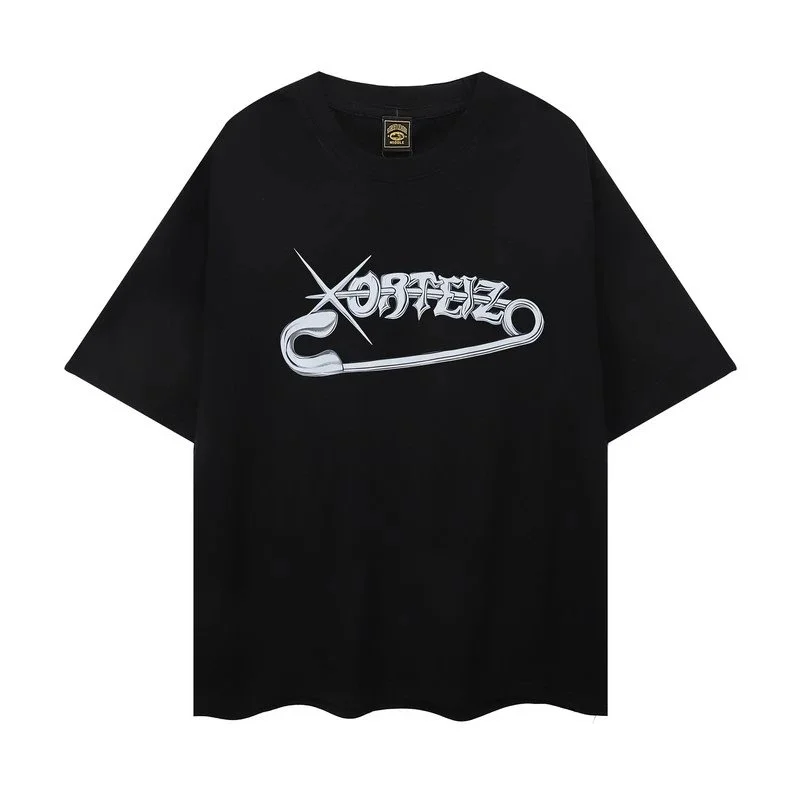
A dark base is a starting point for jeans, plain shorts or a contrasting open layer.
View current listing ↗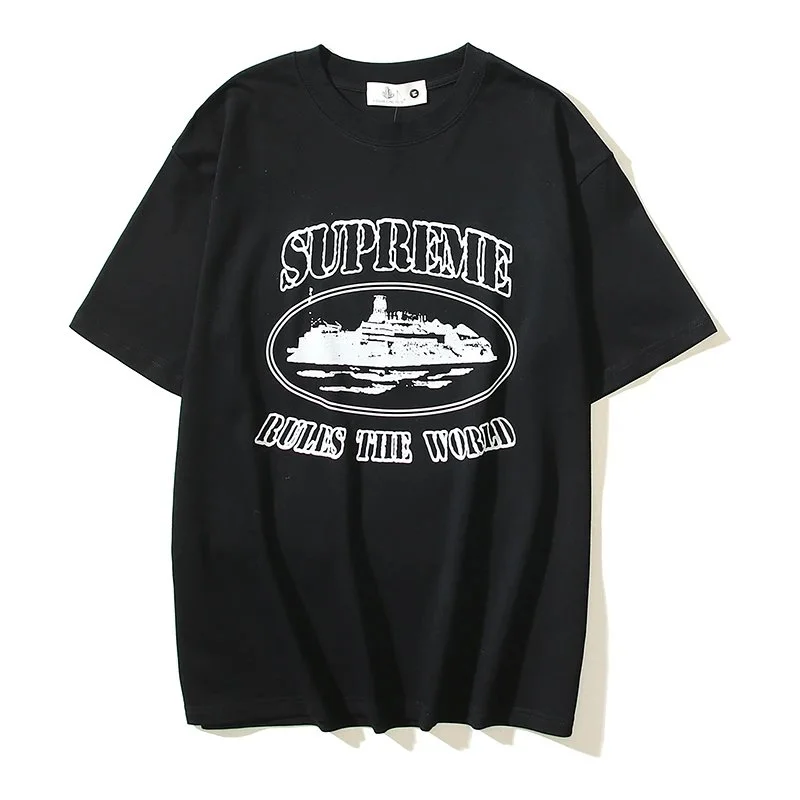
Keep the surrounding pieces quiet while testing how much of the print an outer layer reveals.
View current listing ↗When the print disappears or the outfit feels too busy
If an open jacket hides the most interesting part of the print, check where that print sits. A wide design may extend behind both front panels; a low graphic may sit beneath the jacket hem. You can wear the tee without the outer layer, use a wider opening or choose a smaller central print for layered days. The artwork does not need to be fully visible in every outfit, but you should like the portion that remains.
If the look feels cluttered, simplify the piece nearest the shirt first. A plain jacket creates a clearer boundary than another large graphic; unpatterned trousers give the chest print more breathing room. Only then decide whether the shoes or bag need changing. This keeps you from replacing an entire outfit when one adjacent piece is the problem.
Finally, consider how often you would repeat each version. If you would wear the tee with jeans every week but only with a particular jacket once, choose it for the reliable jeans combination. The other outfits are extra uses. A shirt that works with your ordinary clothes has more purpose than one that only looks convincing beside a complete set of new purchases.
Build combinations, not three shopping baskets
A small set of interchangeable pieces can support several different combinations, with T-shirts, jeans and shoes serving more than one role. [2] You can use that capsule-wardrobe principle without buying an entirely new wardrobe.
List the bottoms and layers you own that suit the new tee. If you can make one jeans outfit, one warm-weather outfit and one layered outfit, the shirt has a clear place in your rotation. If it needs new trousers, a new jacket and new shoes before you would wear it, the attractive thumbnail may be hiding a larger purchase.
When comparing options, start with print placement and silhouette. Use the size guide to confirm measurements separately, and the sneaker styling article to finish the outfit from the hem down.
Explore t-shirts.
Open the current category to compare designs and available options.
Browse this category in the directoryT-Shirts Browse t-shirts ↗References2 sources
- Nike — How to Style a Nike Oversized T-shirt
Published outfit feature showing how an oversized tee changes with different lower halves and footwear.
Accessed - MR PORTER Team — The MR PORTER Team Curates The Ultimate Capsule Wardrobe
Editorial basis for building multiple combinations around a small set of interchangeable pieces.
Accessed