
Quick answer
There is no single size chart that fits every product in a Hubbuy spreadsheet. Measure an item that fits you, compare the selected listing’s measurements and request a warehouse measurement if a deciding dimension is missing. Distinguish flat width, circumference and foot or insole length.
Make a reference from an item you already wear
Lay a similar garment on a flat surface, smooth it without stretching and measure it in centimetres. Choose an item with the fit you want: a close-fitting tee is a poor reference for a roomy winter layer. Write down the measurement method as well as the number so a later photograph can be compared correctly.
For tops, record flat chest width, body length and sleeve length. For trousers, record waist method, rise and inseam. Repeat a measurement if the tape is angled or the fabric is folded.
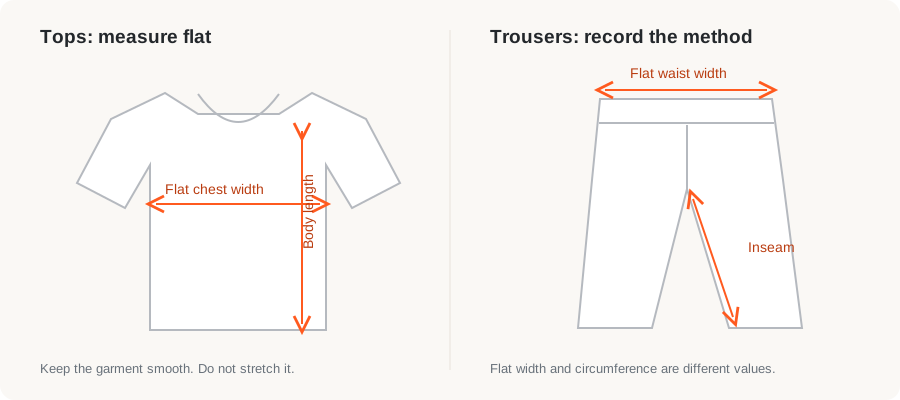
| Measurement | Method | Frequent mistake |
|---|---|---|
| Flat chest width | Measure across the garment between the armpit seams. | Comparing it directly with a full chest circumference. |
| Body length | Check the chart’s stated start and end points. | Mixing shoulder-to-hem with another length method. |
| Waist | Record flat width or circumference and whether elastic is relaxed. | Comparing stretched and unstretched values. |
| Inseam | Measure along the inner leg from crotch to hem. | Using total outside-leg length instead. |
Compare flat widths and circumference correctly
For a garment laid flat, a 54 cm chest width corresponds to approximately 108 cm around that garment at the measured level. That does not mean it fits a 108 cm body comfortably: fabric, intended ease and cut also matter. Compare garment with garment where possible.
If the product chart gives body measurements instead, keep them separate and follow that chart’s guidance. Do not double a measurement already labelled circumference.
Illustrative hoodie comparison
Your comfortable hoodie measures 56 cm flat across the chest and 70 cm in body length. Candidate A lists 52 cm and 68 cm; Candidate B lists 56 cm and 71 cm using the same method. B is closer to your reference. This comparison does not guarantee fit, but shows why the size letter alone is insufficient.
Check sleeve, waist and cut together
A matching chest width cannot compensate for sleeves that are too short or a trouser rise that does not suit you. Compare the dimensions most relevant to the product, and confirm whether the intended fit is close, regular or oversized. Allow room for layers when comparing outerwear with your reference.
For elastic waistbands, ask which state was measured. For dropped-shoulder garments, sleeve measurements may start at a different point from your reference. If two methods differ, ask for a like-for-like check before treating the values as comparable. The QC-photo guide explains how to request a usable measurement view.
Buyer Shares · 6 kg old-money haul — Loro Piana polos & Stone Island shorts
Treat shoe labels and lengths as different information
A shoe’s EU, UK or US label and its measured insole length are not interchangeable. Confirm the sizing system and the selected version, then compare the listing’s fit guidance with a pair that works for you. If measuring an insole, establish whether it is removable and how its length is being measured.
Foot length is also a different measurement from insole length. Do not assume one number can be substituted for the other or add a fixed allowance to every shoe. Model shape, width and intended use can change the practical fit.
- Confirm the selected model, variant and size system.
- Compare with a well-fitting pair using the same measurement method.
- Check width or model-specific fit information if relevant.
- Request the missing measurement rather than relying on a generic conversion chart.
Resolve uncertainty before the return window closes
If the warehouse label differs from your order, document the mismatch. If the correct label arrived but the dimensions do not suit you, check eligible after-sales options before shipment. Long warehouse storage and consolidation does not extend the seller-side return window.
Record your selected size and the decisive measurements with your order. That makes a support request more specific and helps you avoid repeating an unsuitable choice in a later purchase.
Should I always size up?
No. Compare the actual model and measurements; a blanket size-up rule can create a poor fit.
Can I compare centimetres with inches?
Convert them first: 1 inch equals 2.54 cm. Keep the measurement method the same after conversion.
Explore your next find.
Compare selected products, review available QC photos and open the full listing for current details.
Explore products